






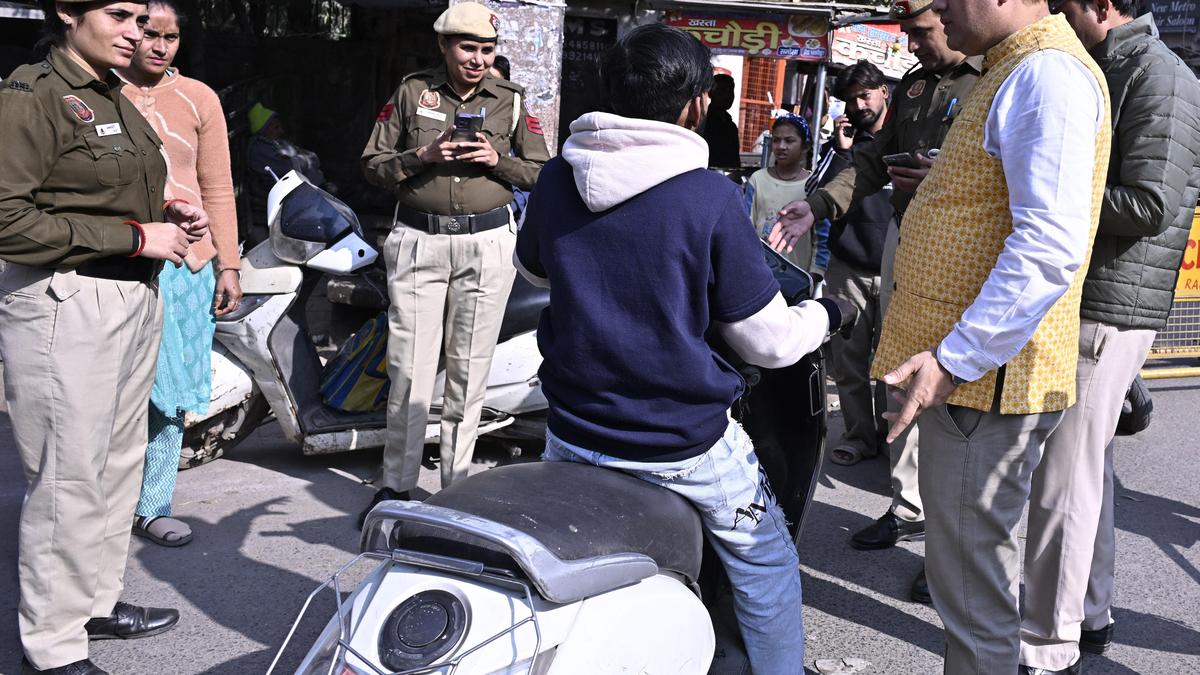

Nine months into the ‘Shishtachar’ (discipline/etiquette) drive, Delhi Police officers say the squads have offered more than an on-ground deterrence against harassment of women in public spaces. The steady presence of these teams on the streets, the officers claim, has revealed patterns of everyday misconduct, helped map pockets where offenders gather, enhanced visibility among women, and strengthened the feedback loop, which in turn has improved policing of such offences.
Deputy Commissioner of Police (Outer Delhi) Sachin Sharma said the squads have detained 2,885 offenders over the past nine months and recorded a 45% decline in crimes against women, including cases of rape, molestation and harassment. “Overall, such cases have fallen sharply from 302 in 2024 to 165 in 2025 (till December 10),” he said.
DCP (West) Darade Sharad Bhaskar reported similar numbers.
“In nine months, we have detained over 2,500 offenders under various sections. The help and perspective we have received through the initiative has improved our approach. We have decided to introduce these squads to each police station in our district,” he said.
Modelled on U.P. drive
The initiative was announced in March this year, a month after the Bharatiya Janata Party (BJP) won the Delhi Assembly election. Establishing squads for women’s safety, similar to the ‘Anti-Romeo Squads’ of Yogi Adityanath’s government in Uttar Pradesh, was one of the BJP’s key poll promises.
Currently, every district has two squads, each comprising 10-12 men and women police personnel. Each fortnight, the squads submit to the Special Unit for Women and Children a report on the number of drives they conducted and the offenders against whom they acted.
Resource mobilisation
Mr. Sharma said the sustained presence of Shishtachar squads in his district has helped them map hotspots for such crimes and deploy these teams more effectively in public transport and crowded places such as markets, schools and colleges.
“In our district, we mapped certain areas in Nihal Vihar and Ranhola, for instance, where the squads reported an uptick in such cases. And that helped us mobilise resources better. However, a lot more needs to be done. Engagement with the community is necessary and we are taking steps towards that,” the officer added.
A woman constable who did not wish to be identified cited the example of Janakpuri’s Bharti College. The exit gate of the woman-only institute meets a busy road signal, from where men were reportedly passing lewd comments and attempting to touch students. A Shistachar squad is now deployed outside the college gate during the opening and closing hours.
Sonu, a first-year BA programme student, said the presence of the squad in plain clothes has created a sense of security among the women students. “We know help is at hand if anything happens. And the boys have stopped loitering because they know the police could question or detain them.”
Other such hotspots, such as the Janakpuri C Block traffic signal, have been dealt with similarly, the constable added.
During peak office hours, squads across the city also keep a watch over public transport, such as buses, where they guide women commuters on how to use the ‘Stop’ button, which alerts the driver to stop the bus, the Himmat Plus app, which sends an SOS to the nearest PCR, and the 1091 helpline for women, besides the 112 emergency response system.
Spin-off
Findings from the Shishtachar squad drive have encouraged the launch of more such initiatives. In the West district, for instance, the police are experimenting with a ‘Sanskarshala (moral values)’ drive whose aim is to connect with and counsel teenagers idling through the day.
“The Shishtachar drive highlighted the need to engage with young boys, who instead of being in schools and colleges, were idling away their time in public places such as parks. To connect with and focus on vulnerable youngsters, we came up with our own initiative — Sanskarshala,” said Mr. Bhaskar.
He added, “As part of this drive, dedicated community policing teams conduct regular field visits to local parks and public spaces. The teams identify and counsel teenagers who have dropped out. The aim is to sensitise boys on appropriate conduct towards women and girls and also to counsel them against using drugs.”
Published – December 14, 2025 12:29 am IST