




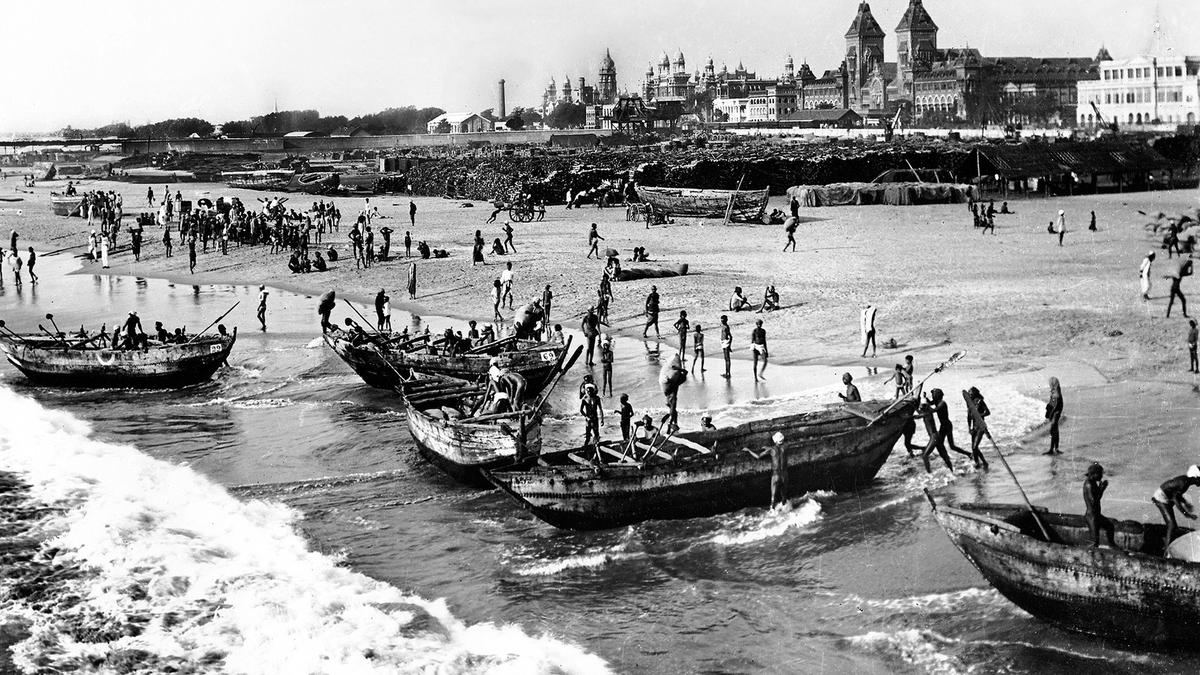


Knowing they were essential to the city’s trade, the masula boatmen charged what the market could bear, behaved roughly with passengers that argued, and when the government tried to regulate them, went on strike, quickly bringing the city to its knees.
| Photo Credit: The Hindu Archives
Among the earliest documented areas of the city is Maquaskuppam – an identity that does not exist anymore. It denoted a settlement of fishermen, and over time, fragmented into what we recognise as the fishing settlements along and just south of the Marina.
Maqua itself seems to be a corruption of machua, Hindi for fisherfolk. Strangely, another loanword marker for the people who manned boats are the two streets named after Narayan and Jaffer Sairangs. These are in George Town and the surnames, a corruption of the Persian sarhang, indicating they were second-in-command on native vessels, responsible for docking and unloading. For that matter, the frequently used Tamil word for sailor, malumi, is a corruption of the Persian mua’allimun.
Boating in native craft along the coast existed long before the Islamic merchants came here. Today, thanks to modern vessels, we do not see boats plying our coast, except for those on fishing expeditions. But, till the end of the 19th Century, they were a familiar sight.
Appar in his 7th Century Tevaram on Thiruvottriyur sings of taking the vessel of the mind on a voyage with intellect as the oar and anger as the cargo, only to have it all crash on the rock of desire. In the 12th Century Periyapuranam, Mylapore is depicted as a thriving harbour, with rafts unloading elephants. Later known as Shah Bandar, this was probably completely destroyed by the British. Mamallapuram was a thriving port as we all know.
It was with the arrival of the colonials that the fishermen acquired another profession. The large vessels could not dock close to land owing to the surf. They anchored two miles in the sea at a place known as Madras Roads and every passenger and item of cargo had to make the last leg of the journey to shore by masula boats and rafts. The latter, strips of wood tethered together by rope, were known in Tamil as Kattu Maram and gave rise to the English word catamaran. Travelling from land to the ships also required these vessels.
Knowing that they were a vital link in keeping the city’s trade alive, the boatmen naturally asserted themselves. They charged what the market could bear, behaved roughly with passengers that argued, and when the government tried to regulate them, went on strike. That brought the city to its knees fairly quickly. The boatmen were routinely abused in official and private correspondence, but living as they did, on the fringes of society, you cannot blame them for making a quick buck when opportunity arose.

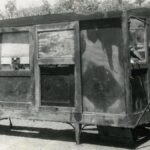
Masula boats were simple, flat-bottomed, and high-sided wooden boats that could handle surf conditions well. These were used to ferry passengers and goods from ships to the shore before a proper harbour was built in Madras.
| Photo Credit:
The Hindu Archives
What the city needed was a proper harbour. Madras, however, ranked low in imperial priority, and besides, a clique comprising Calcutta, Bombay, and Colombo businessmen made sure that all proposals to build a harbour here were vetoed. It was left to the Madras Chamber of Commerce (now the Madras Chamber of Commerce and Industry) to wage a lone battle. Persistence paid off however, and by 1875, work on a harbour began. The technology of the time and faulty designs, which did not quite comprehend weather conditions here, ensured that the project hit roadblocks repeatedly, and the boatmen laughed all the way to the bank. But by the late 1890s, a harbour was in place and then, with a determined Chairman of the Port Trust in Sir Francis Spring, rapid developments took place, bringing the era of the boatmen to a close.
With that, the boatmen went back to fishermen, being marginalised. It is a situation that persists. Though they have proved resilient and fought for their rights, we often forget that they are the city’s first inhabitants.
Published – August 22, 2026 06:01 am IST