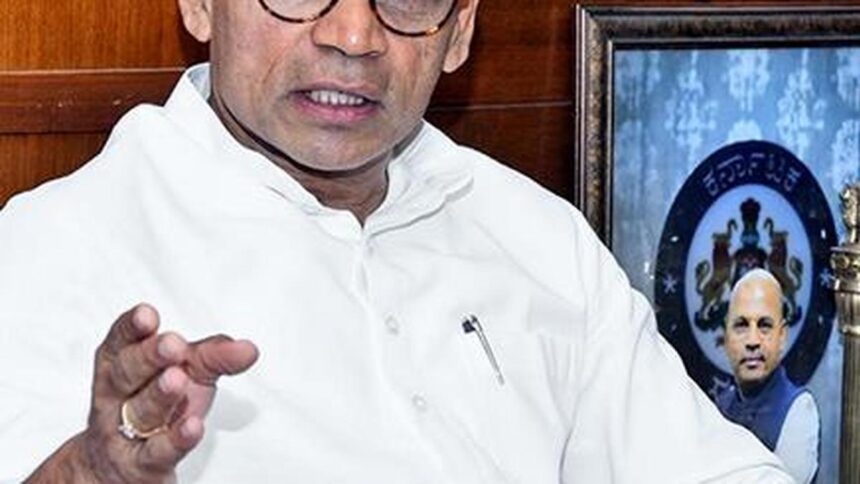






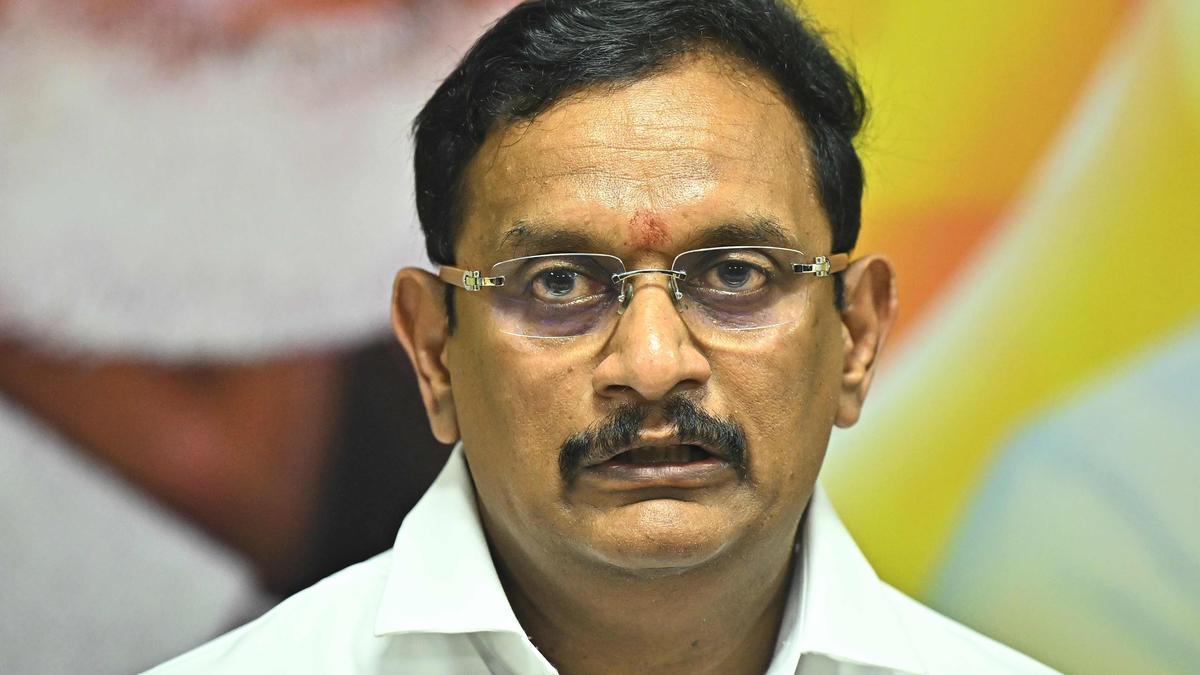

Vijayawada MP Kesineni Sivanath
Speaking in the Parliament on Monday on the first batch of supplementary demands for grants for 2025–26, TDP MP Kesineni Sivanath (Chinni) highlighted the Union government’s commitment to welfare, agriculture, infrastructure, education, and health, while criticising the YSR Congress Party (YSRCP) for opposing the Public-Private Partnership (PPP) model for medical colleges in Andhra Pradesh.
Rejecting Opposition claims of economic disorder, the MP said India’s economy had significantly strengthened under the leadership of Prime Minister Narendra Modi, with Foreign Direct Investment crossing USD 81 billion, minimum support prices (MSP) for major crops rising by 50 to 70%, and over 75% of the defence capital budget now reserved for Indian industry.
The MP informed the House that the supplementary demands cover 72 grants, seeking approval for an additional gross expenditure of ₹1.32 lakh crore.
Referring to agriculture, Mr. Sivanath said ₹31,000 crore had been reappropriated to the Ministry of Chemicals and Fertilizers to strengthen the urea subsidy scheme. He recalled that during a sudden surge in demand in the kharif season in Andhra Pradesh, Chief Minister N. Chandrababu Naidu had personally taken up the matter with the Union government, following which Union Minister J.P. Nadda had ensured timely release of fertilizer stocks, protecting farmers and crops.
On infrastructure, the MP said ₹18,800 crore had been allocated to the Ministry of Road Transport and Highways, noting that 10,660 km of highways were built in the financial year 2025-26 so far, exceeding targets. He also stressed the need for taking up the Vijayawada and Visakhapatnam Metro projects, pointing out that Andhra Pradesh was the only southern State without a metro rail system.
Defending the PPP model for medical colleges, he accused the YSRCP of spreading misinformation. He said the previous government had failed to fulfil its promise of building 17 medical colleges, spending less than ₹1,000 crore against an estimated ₹8,500 crore in four years. He clarified that under the PPP model, government control remains intact, reservations are protected, fees are capped, and 70% of hospital beds are reserved for Ayushman Bharat patients.
He concluded by stating that the supplementary demands reflected the Centre’s development-oriented approach, adding that India achieved 8.2% GDP growth despite global uncertainties.
Published – December 15, 2025 06:35 pm IST