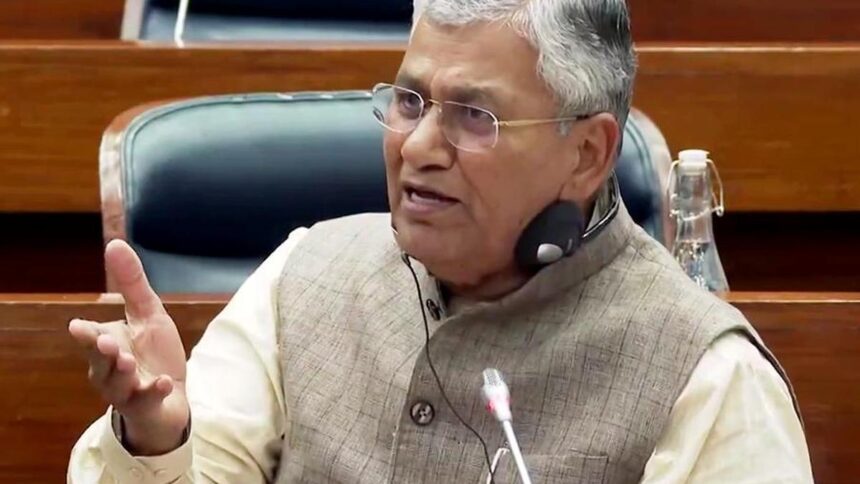







Member Secretary and Chief Executive Officer of Central Silk Board (CSB) P. Sivakumar.
The National Fibre Scheme, announced by Union Finance Minister Nirmala Sitharaman during the Budget presentation for 2026-27 on February 1, aims to integrate various schemes for natural fibres such as silk, wool and jute, along with man-made and new-age fibres under the Ministry of Textiles.
While the details of the integrated scheme covering various natural and man-made fibres have not been revealed, Member Secretary of Central Silk Board (CSB) P. Sivakumar stated that presently, schemes exist for the promotion of individual natural fibres such as silk, wool or jute. However, the proposed National Fibre Scheme will be an umbrella scheme of the Textile Ministry for all natural as well as man-made fibres such as polyester and new-age fibres.
“We are aiming to double the country’s textile value chain from the existing $170 billion to $350 billion by 2030,” Mr. Sivakumar told The Hindu.
“To achieve this, we need intervention at every level. At the raw material, industry level, marketing level, etc. We need to ensure international visibility,” he said.
Dr. Naresh Babu, Joint Secretary of CSB, stated that the scheme aims to cover all activities across the entire value chain, ranging from soil to fabric. He mentioned that the specifics of the scheme are currently being developed.
Dr. Babu said the scheme would also aim to promote the export of the goods made from these fibres.
Citing the example of silk, which is an important natural fibre, Dr. Babu said India is the second-largest producer of raw silk in the world, next only to China, but was aiming to become the global leader by 2030. The scheme will definitely help the country — currently producing approximately 39,000 metric tonnes of raw silk each year — reach its target of 50,000 tonnes of raw silk by 2030, he said.
Published – February 02, 2026 12:06 am IST