


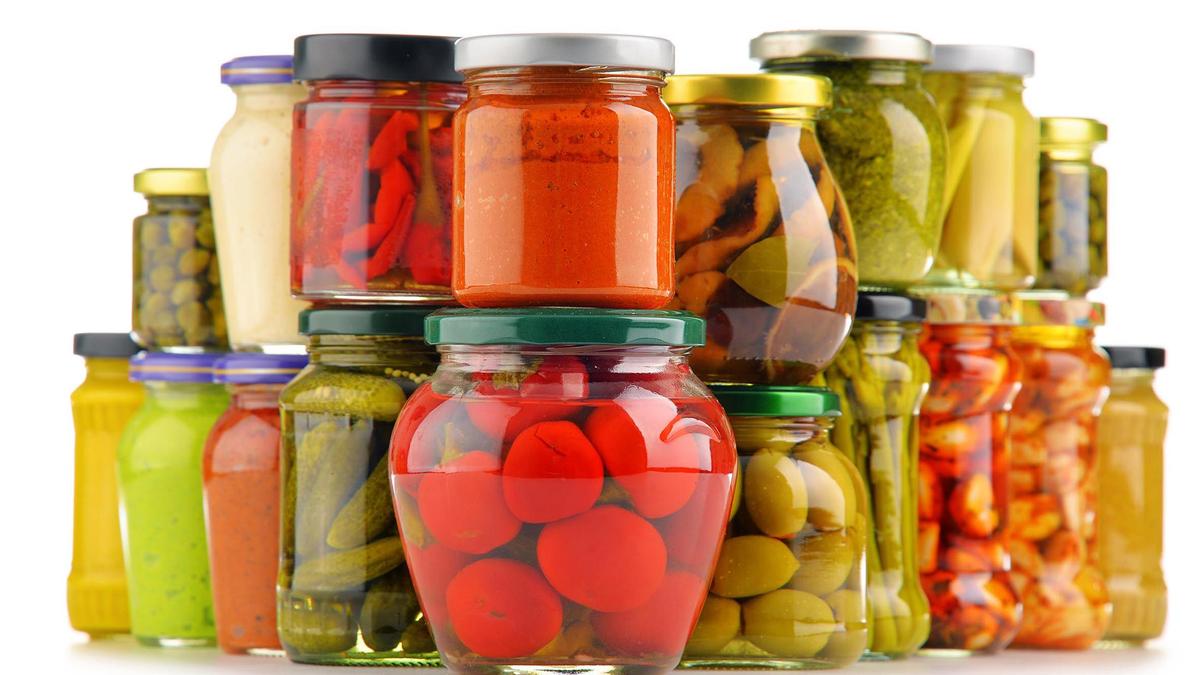


Sodium benzoate, a preservative used in foods such as pickles, was found to induce cellular shrinkage and collapse in bacteria, researchers said.
| Photo Credit: Getty Images/iStockphoto
In a collaborative effort, researchers from the Institute of Nano Science & Technology and Unilever R&D, Bengaluru, have traced the moment preservatives disrupt bacterial cells, helping pave the way for smarter and safer preservation technologies.
According to the Department of Science and Technology, sodium benzoate (SB) and phenoxyethanol (POE) are effective preservatives. While the former, in use since the early 1900s, helps keep foods such as pickles, ketchup and fizzy drinks safe, the latter is used in shampoos, moisturisers, sunscreens and even certain vaccines.
Poorly understood
However, despite their widespread use, the molecular mechanisms underlying the antibacterial activity of these two leading preservatives, SB and POE, remain poorly understood.
The researchers addressed this by integrating transmission electron microscopy (TEM) with complementary biochemical analyses to elucidate the antimicrobial mode of action of preservative systems.
The collaborative study investigated preservative-induced cellular and biochemical responses in two representative bacterial pathogens: the Gram-positive Staphylococcus aureus and the Gram-negative Pseudomonas aeruginosa.
The researchers found that preservatives attack bacteria on multiple fronts. The microbial cell envelope becomes physically compromised, while reactive aldehydes and oxygen-derived species accumulate inside the cell, disrupting essential proteins, genetic material and other critical cellular functions.
Multi-target assault
“Rather than a single mode of action, the preservatives deliver a coordinated multi-target assault, providing one of the clearest views yet of how bacterial cells are inactivated,” the department said.
It added that advanced imaging revealed that sodium benzoate and phenoxyethanol follow distinct pathways to bacterial inactivation. Sodium benzoate induced cellular shrinkage and collapse, whereas phenoxyethanol caused membrane expansion and eventual rupture.
The researchers further showed that sodium benzoate becomes significantly more potent in acidic environments, exhibiting an approximately 16-fold increase in activity, while phenoxyethanol displayed consistent efficacy across a wide pH range.
These findings provide important insights into how preservative performance can be optimised for different formulation conditions.
Will help industry
The department said that knowing exactly how these preservatives work can help industry choose the correct one for a particular product format. Sodium benzoate is suitable for acidic products, while phenoxyethanol is suitable where pH variations are not a concern. Such insights can help manufacturers use the right amount of preservative, reduce spoilage and waste, and stay a step ahead of bacteria that might otherwise evolve resistance.
Published – September 24, 2026 07:12 pm IST