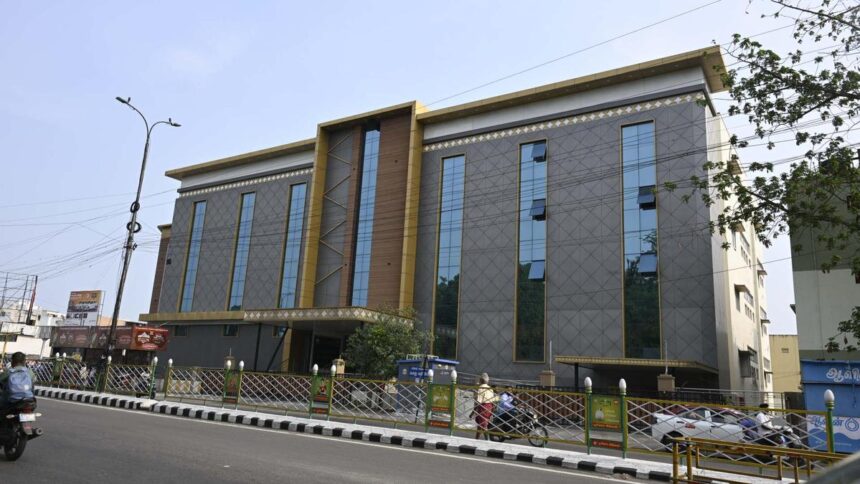




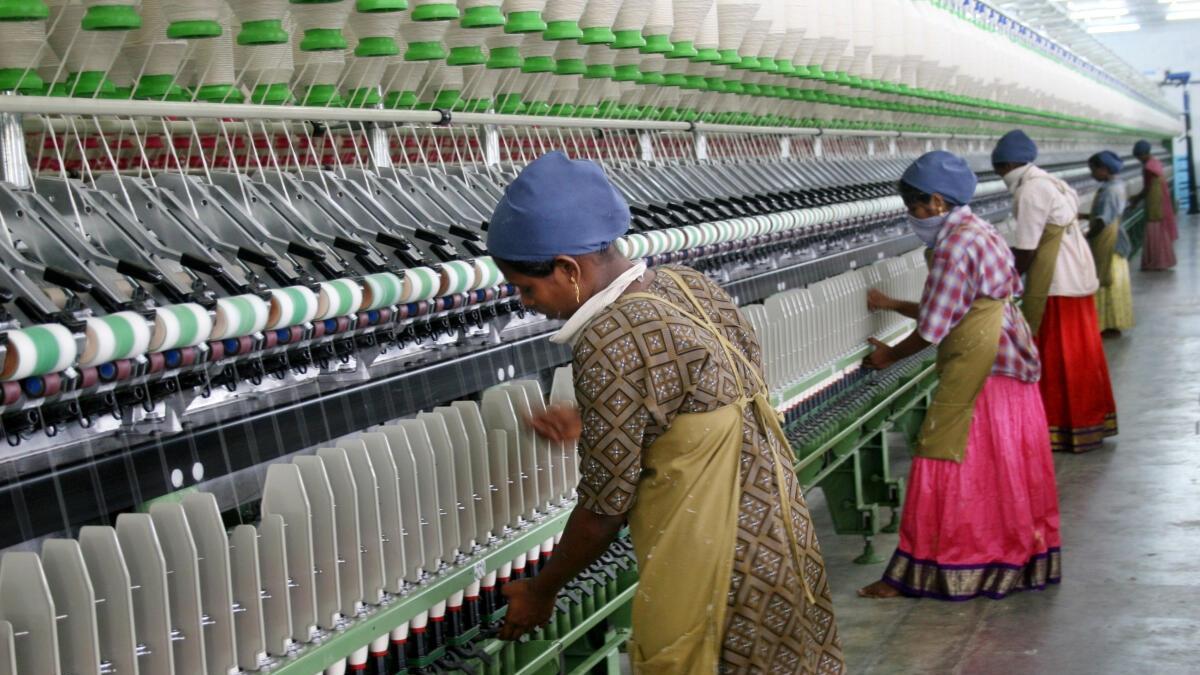


Tamil Nadu State Commission for Women has sought further attention for welfare of women workers in Tiruppur industries.
| Photo Credit: S. SIVA SARAVANAN
Tamil Nadu State Commission for Women has recommended conducting regular awareness programmes for women workers in Tiruppur district on grievance redress mechanisms through Internal Complaints Committees (ICC) constituted under the Sexual Harassment of Women at Workplace (Prevention, Prohibition and Redressal) Act, 2013 (POSH Act).
During a recent inspection in textile units in Tiruppur district, Chairperson of the Commission A.S. Kumari found limited awareness among the workers on the ICC. In some establishments, details of the ICC members were not prominently displayed.
“The Committee is of the view that merely constituting the ICC is insufficient, unless it functions effectively and in accordance with the statutory requirements,” Ms. Kumari said in her follow-up report submitted to the Secretary, Department of Labour Welfare and Skill Development, Government of Tamil Nadu.
The Commission also noted the presence of workers in the age group of 15-17 in certain establishments. The stand of the management representatives was that their employment was permitted under the Child and Adolescent Labour (Prohibition and Regulation) Act, as amended, and they produced age verification and medical fitness records.
However, the Commission expressed concern over suitability of employing adolescents in industrial environment with machinery, dust exposure, heat and other occupational risks. The Commission opined that Tamil Nadu, as a progressive State, may consider measures aimed at gradually reducing and ultimately eliminating adolescent labour in factory and mill establishments. Such measures would further strengthen child protection standards and promote educational opportunities, the report said.
The Commission also called for appropriate action by the Tiruppur district administration to ensure payment of wages for weekly rest days in accordance with applicable labour welfare provisions.
The Commission called for submission of an Action Taken Report by the district administration within nine weeks.
Accompanied by officials from the Social Welfare Department, Directorate of Industrial Safety and Health, Labour Department, and Police Department, Ms. Kumari had carried out a comprehensive two-day inspection in seven textile and garment manufacturing establishments earlier this month.
The inspection focussed on workplace safety and security; payment of minimum wages; indicators of forced or bonded labour; labour rights; working conditions; freedom of employment and movement; prevention of sexual harassment; and functioning of the ICC under the POSH Act, welfare of migrant workers, and physical and psychological well-being of women workers.
The Commission conducted confidential inquiries with women workers to rule out illegal advances, and verified statutory, wage and employment records, besides holding discussions with management and human resource representatives.
The team also inspected hostels, clinics, rest rooms, sanitation facilities and accommodation provided to workers.
The Commission observed that a majority of the workforce, particularly women migrant workers, were from Odisha. There was no evidence of forced labour, bonded labour or coercive employment practices.
The Commission noted that wages were paid through bank transfers, and that only permissible deductions for Provident Fund had been made. An average wage of approximately ₹500 per day for an eight-hour work shift was found to be prevalent, the report stated.
Published – September 17, 2026 08:55 pm IST