




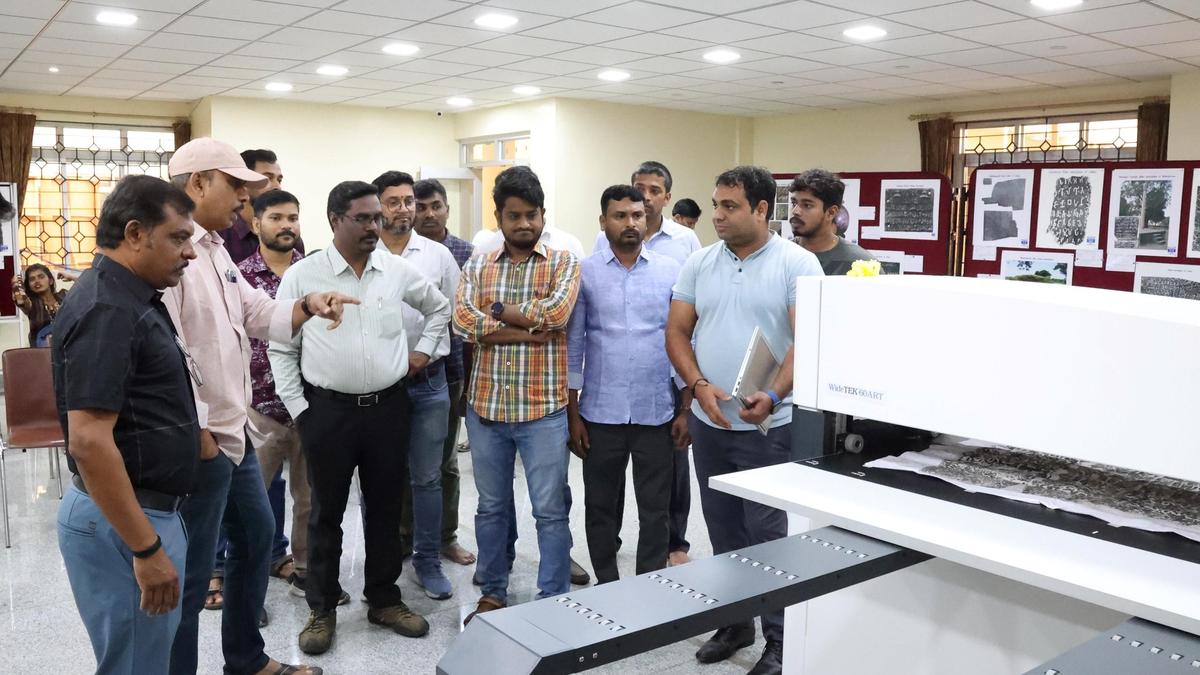

An estampage of an inscription being scanned at the Epigraphy Directorate, Archaeological Survey of India, Mysuru, on December 17.
| Photo Credit: SPECIAL ARRANGEMENT
The digitisation of inscriptional estampages at the Directorate of Epigraphy, Archaeological Survey of India (ASI), Mysuru, has commenced under Bharat Shared Repository of Inscriptions (BharatSHRI) in a boost to research and scholarship.
The project was accorded budgetary approval in the Union Budget 2023-24. The digitisation of inscriptional estampages is already under way at different branches of ASI across the country.
Estampages are replicas of original inscriptions created using inked paper, and the Directorate of Epigraphy has a repository of nearly 76,000 estampages of inscriptions — generally on stone or copper plates — from across India, dating back to several centuries and hence being an important source of history.
The digitisation exercise was inaugurated at the Directorate of Epigraphy in Mysuru on December 17. Munirathnam Reddy, director, (Epigraphy), ASI, said it will help create a comprehensive digital repository of India’s inscriptions under the BharatSHRI project.
“We will upload and update the digital database of the scanned material every week. Scholars and the general public will have access to the inscriptional material, complete with metadata, transcriptional details, and so on,” he added.
Explaining the benefits of the project, Dr. Reddy said it will significantly boost epigraphical research and for scholars, it will obviate the need to physically visit epigraphy offices or museums to study them, thus helping them save time.
Since the inscriptions can be accessed digitally, it will help preserve the original estampages, some of which are more than 100 years old and in Dravidian languages including Kannada, Telugu and Malayalam. The Tamil estampages have been shifted to Chennai.
The digitisation work is being carried out by Bengaluru-based Crystal Infosystems and Services Pvt. Ltd., which has initiated the scanning process using a specialised high-resolution scanner.
The project entails making high-resolution images with a scanning ratio of 1:1 that can provide a print of the actual size of the original, said Dr. Munirathnam.
“Some estampages are 20 ft long and can be accessed without loss of clarity,” he added, saying that the digitisation is expected to be completed in six months and will provide scholars with access to digital archives at the click of a button.”
Published – December 17, 2025 08:10 pm IST