




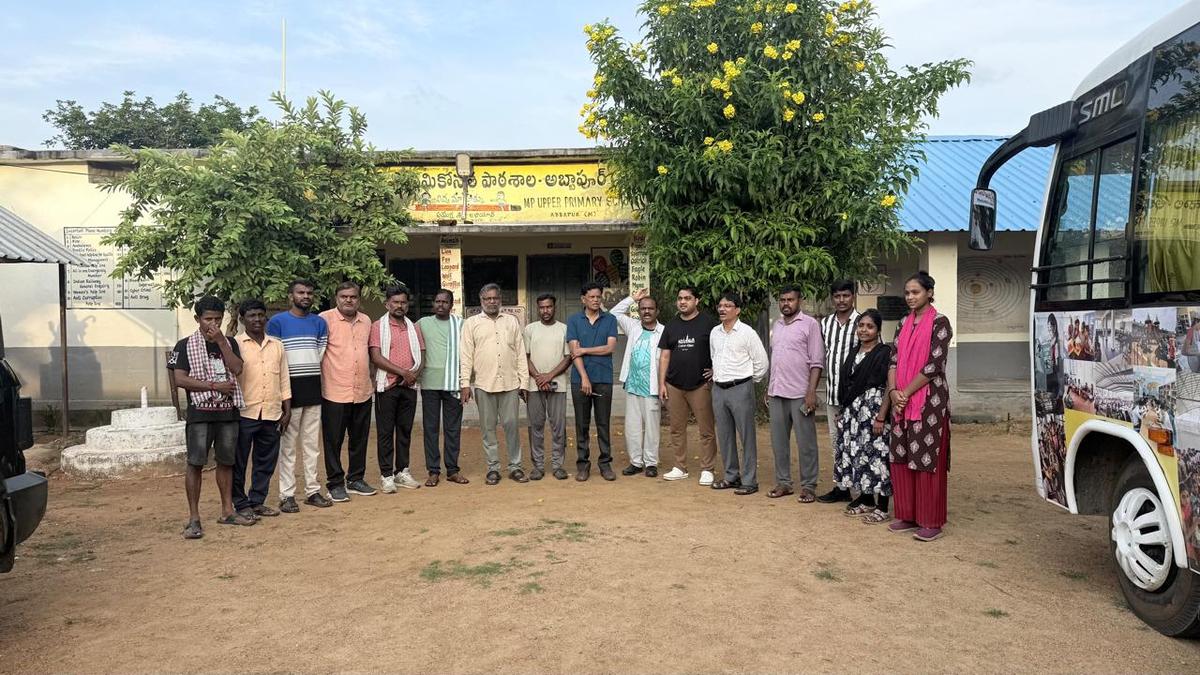


TPF team stayed overnight at a government school at Abbapur in Nizamabad district on September 18 under its ‘Badi Nidra’ programme to highlight the condition of school infrastructure.
| Photo Credit: Special Arrangement
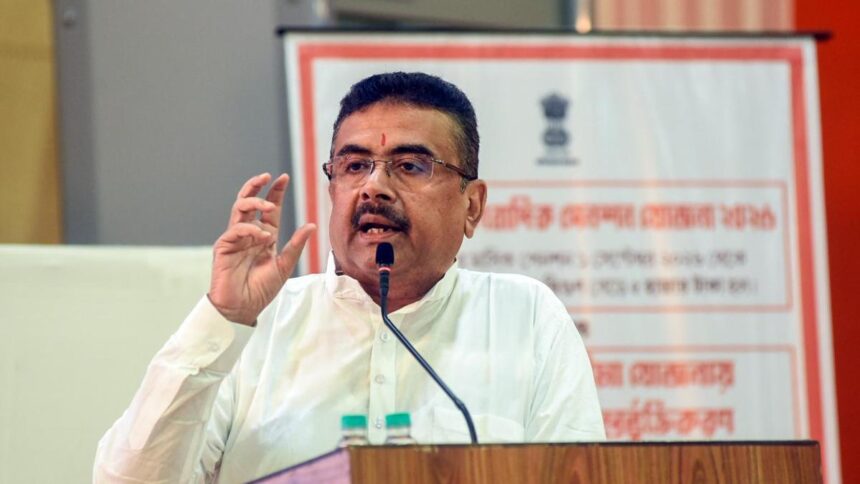
Telangana People’s Front (TPF) members, educationists and activists, at a round-table conference in Nizamabad on Saturday, called for stronger measures to address deficiencies in government schools and regulate the rising cost of private education in Telangana.
Former Chairperson of Telangana Education Commission and TPF member Akunuri Murali said that India had historically kept education out of the reach of large sections of the population. “Nearly all of the 30,099 schools listed under UDISE in Telangana lacked the standard infrastructure required for a functional school,” he said.
He further added that the Telangana Education Commission had, in its report submitted to the State government, defined infrastructure and academic standards for educational institutions. He called for greater public attention to the issue of educational deprivation.
The round-table was organised as part of the TPF’s 12-day Education Bus Yatra, which is focusing on concerns related to school education and seeking measures to strengthen public education and regulate private school fees. As part of the yatra, the TPF team stayed overnight at a government school at Abbapur in Nizamabad district on September 18 under its ‘Badi Nidra’ programme to highlight the condition of school infrastructure.
TPF core committee member M. Champalal questioned the effectiveness of setting up a website to address fee regulation in private schools. He called for the enactment of a Fee Regulation Act and the establishment of a regulatory body to ensure its implementation.
Dalit Bahujan Front (DBF) leader P. Shankar demanded that the State government issue a white paper on the education sector detailing the steps taken over the past three years to improve government schools. He also questioned why the government had not tabled the education policy report submitted by the Telangana Education Commission, while it had tabled the Kaleswaram Commission report.
TPF core committee member Srujana Yadav called for greater participation of women in education reforms, saying their involvement was essential for meaningful changes in the sector.
Concluding the discussion, Mr. Murali outlined a three-part model for developing a prototype school. The first part would focus on infrastructure and creating a dignified learning environment for children. The second would focus on teaching-learning materials and Interactive Flat Panels in classrooms to support quality teaching. The third would cover extra-curricular activities aimed at the overall development of students.
Published – September 19, 2026 08:33 pm IST