





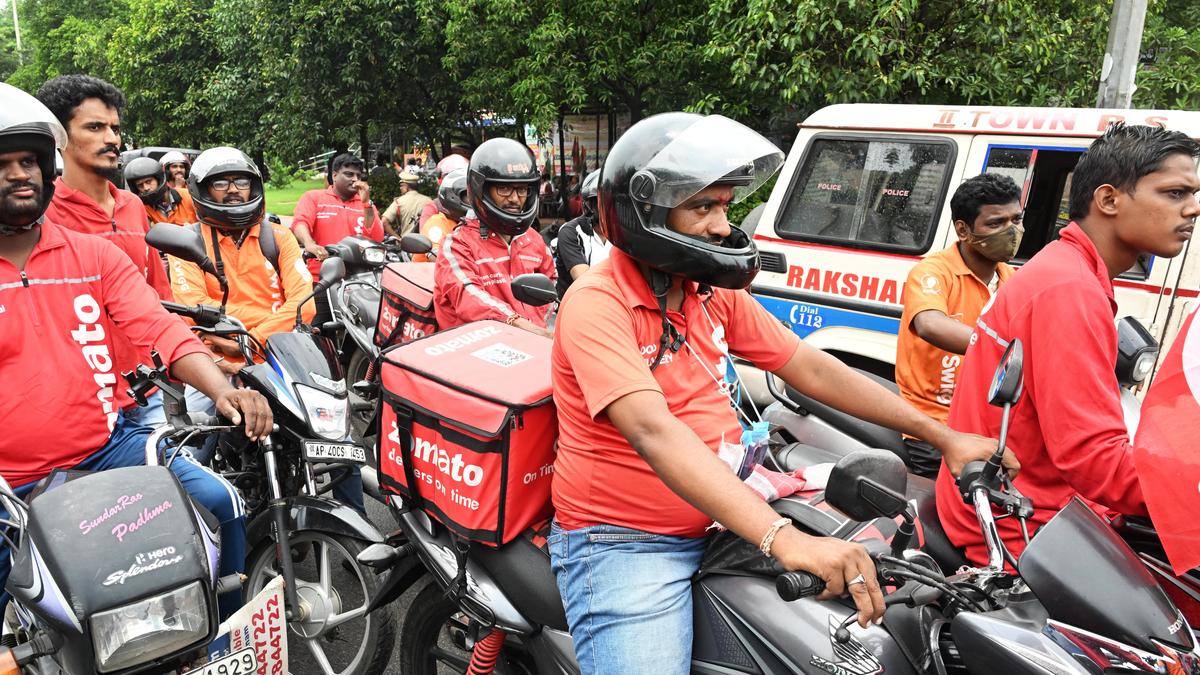

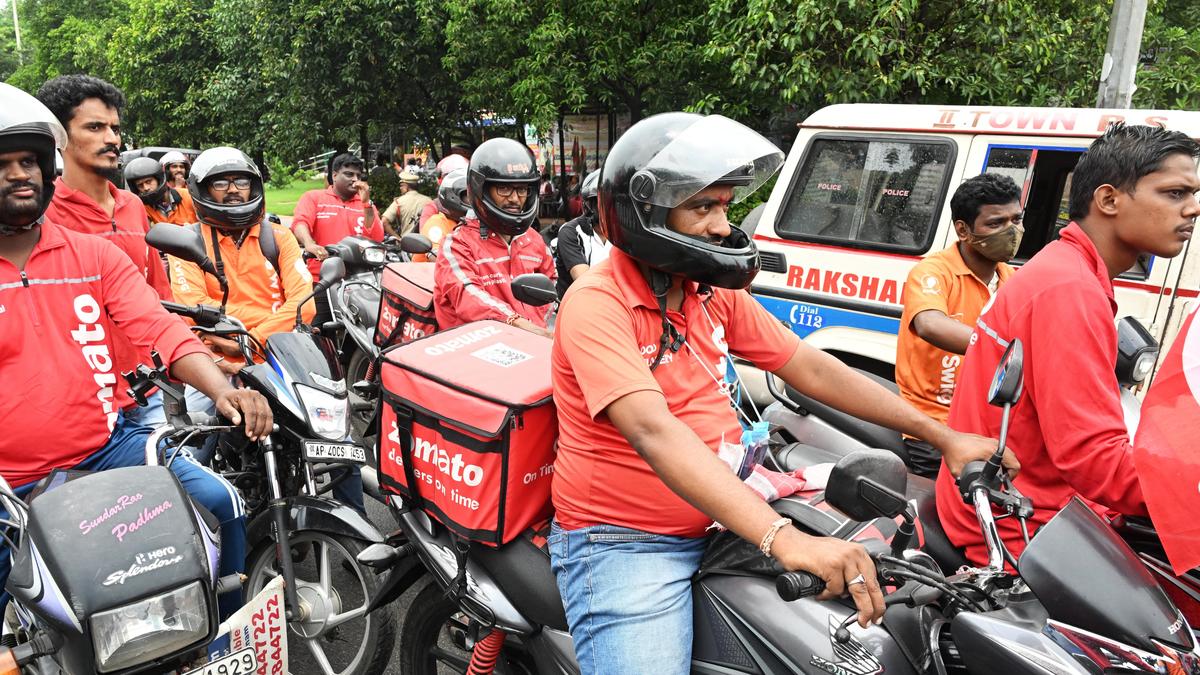
The government has decided to levy a welfare fee of 1% to 1.5%, with a cap, on aggregator platforms
| Photo Credit:
The State government is set to move ahead with the formation of a Gig Workers’ Welfare Board, with a committee likely to be set up by January 27 to work out the details. The government has decided to levy a welfare fee of 1% to 1.5%, with a cap, on aggregator platforms.
“The State government will levy a welfare fee of 1% to 1.5% on aggregators,” Labour Minister Santosh Lad confirmed to The Hindu. He added that the welfare fee will vary across sectors, with cab and transport aggregators treated differently from food delivery and other app-based platforms and will be calibrated based on each aggregator’s business model.
Low initial levy
The relatively low levy is aimed at ensuring a steady welfare fund for gig workers without overburdening the platforms, Mr. Lad said, adding that meeting was conducted with all major platforms and decision was taken considering all the valid concerns.
As per the Karnataka Platform based Gig Workers (Social Security and Welfare) Act, the welfare board will have 15 members, with representation from the government, gig workers, aggregator bodies and civil society. The government will be represented by five members, including the Labour Minister, while gig workers and aggregators will have four representatives each, along with two members from civil society. The government has finalised the list.
Once the welfare fund begins to receive contributions, the welfare board will assess whether the amount collected is sufficient to provide social security benefits to gig workers. If the funds are found to be inadequate, the welfare fee may be revised upward, up to a maximum of 5%. The fee is designed to vary across platforms to reflect differences in scale, revenue patterns and modes of operation, rather than applying a uniform rate to all aggregators.
Draft state rules
The Labour Department had recently released draft Karnataka Industrial Relations Rules and is scheduled to publish draft State rules under the Code on Wages, the Code on Social Security, 2020, and the Occupational Safety, Health and Working Conditions Code, 2020 (OSH Code) on January 27. The move, officials said, is aimed at operationalising the four central labour codes at the State level by laying down a uniform framework governing wages, industrial relations, workplace safety and social security across sectors.
Published – January 26, 2026 07:00 pm IST