





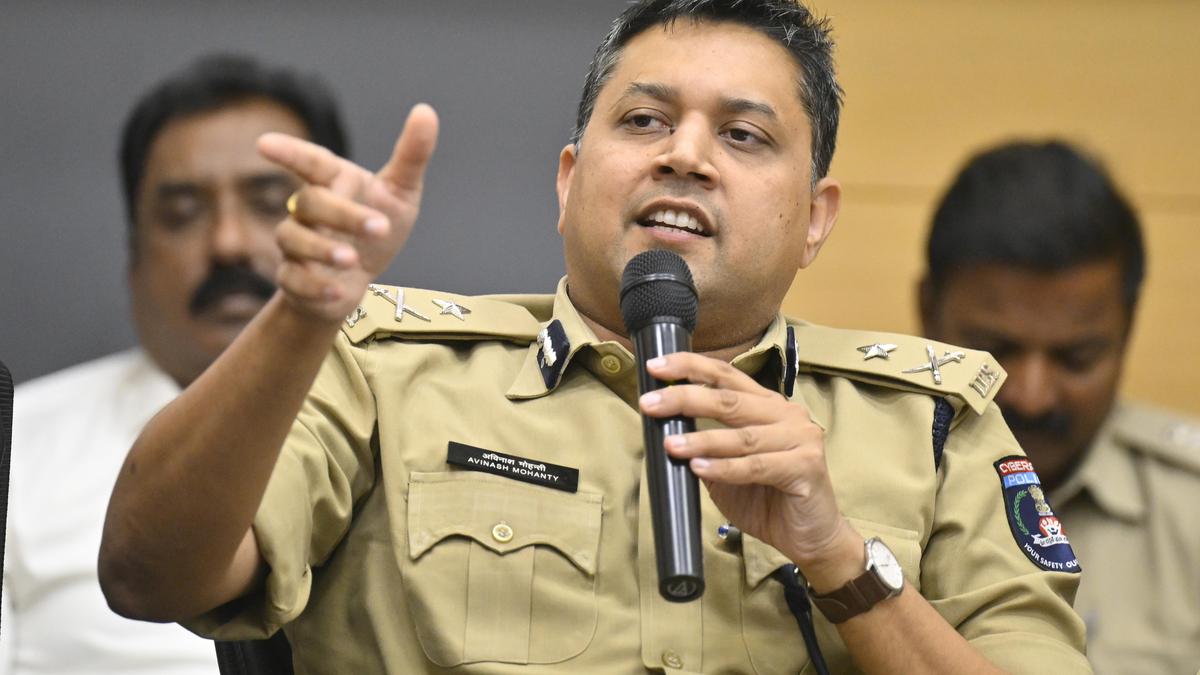


Telangana Standards Authority for Food and Essential Drugs (TG SAFE) Commissioner Avinash Mohanty
The Telangana government recently merged the Food Safety department and the Drugs Control Administration (DCA) into the Telangana Standards Authority for Food and Essential Drugs (TG SAFE). In conversation with The Hindu, TG SAFE Commissioner Avinash Mohanty talks about the authority’s plans for dedicated enforcement teams, a police component, strengthening its legal and laboratory machinery, addressing the shortage of food inspectors and improving the complaint mechanism.

What will TG SAFE change in food and drug enforcement, and why is a police component needed?
Earlier, different components were working independently. Now, we are trying to bring everything under one command. The next step is the creation of a dedicated enforcement team. The team will have officers from the Food and Drug departments as well as the police, who will work together as joint teams. Under the respective Acts, the food officer or drug inspector is empowered to take legal action, while the police will provide support.
One thing that was lacking earlier was police support. When the police are involved, it brings additional strength to the team. There can be all kinds of problems and risks during enforcement, so the police component also provides protection. The police also bring intelligence-gathering capabilities and the ability to liaise with local law enforcement.
How will the police component help in drug-related enforcement?
There are provisions under the drugs law where punishment can extend up to 10 years. In certain cases, arrest is required. Once a chargesheet is filed, there can be non-bailable warrants (NBWs) and summons, not only within Telangana but also in other States. Drug inspectors are presently not equipped to go and execute such warrants and summons. A police component will help them do all this.
At the DCA, enforcement was largely stand-alone and a lot of cases were pending because we could not execute NBWs. Many of these warrants are from Uttar Pradesh, Himachal Pradesh, Maharashtra and other places. Once the organisation settles its administrative arrangements, we can gradually start sending teams outside the State as well.
There is also a plan under consideration to have a dedicated police station embedded within the organisation. If we need to register a case at any stage, we could do it internally.
How will the legal wing function?
Once we start active enforcement, we need prosecutors to follow up our cases in the courts. At present, we depend on regular prosecutors. We want to have dedicated prosecutors for drug and food cases in each district court. We also intend to have a senior legal officer at the head office to advise us. As we undertake stronger enforcement, I am sure violators will approach the High Court as well. A lot of things are going to happen and it is not going to be very simple. That is why we anticipate the need for a dedicated legal wing.
There has been a shortage of food and drug inspectors across Telangana. How Will TG SAFE address this?
There are very few food inspectors. Drug inspectors are also limited, although the situation is not as bad as it is with food inspectors. Food inspection will require real scaling up. Drug inspection may also require an increase, but its organisational structure is comparatively better. The initial enforcement component, including the joint enforcement teams, will be limited to the Core Urban Region Economy (CURE) region. Increasing posts and other arrangements will also initially focus on the CURE region. The CURE region accounts for most of the establishments, so that is where we will begin.
What changes are planned for the laboratories?
The drug laboratory in Hyderabad has been upgraded over the last couple of years using available funds. The food laboratory is at Nacharam. We want to similarly upgrade the food laboratory. I visited it and it requires a lot of work. We are looking at seriously upgrading it because once enforcement starts, the number of samples will increase and the laboratory needs to be capable of handling them.
At present, the laboratory can handle around 600 to 700 samples a month. That is an aggregate of all types of samples and is only a ballpark figure. Depending on the work, it can go up to 1,000 or come down to 500 or 400 samples. We would like to increase the capacity fourfold. Once enforcement is strengthened, the number of samples will naturally increase. The laboratory has to be prepared for that increase.
What changes are being planned in the complaint mechanism?
Earlier, the DCA had a separate toll-free number, while food safety complaints were received through social media and other channels. We are trying to have a dedicated toll-free number for both food and drugs. Food will naturally generate more complaints because people consume food more frequently. The existing X handle of the Telangana Food Safety Department will be changed to the TG SAFE.
Published – August 24, 2026 07:14 pm IST