



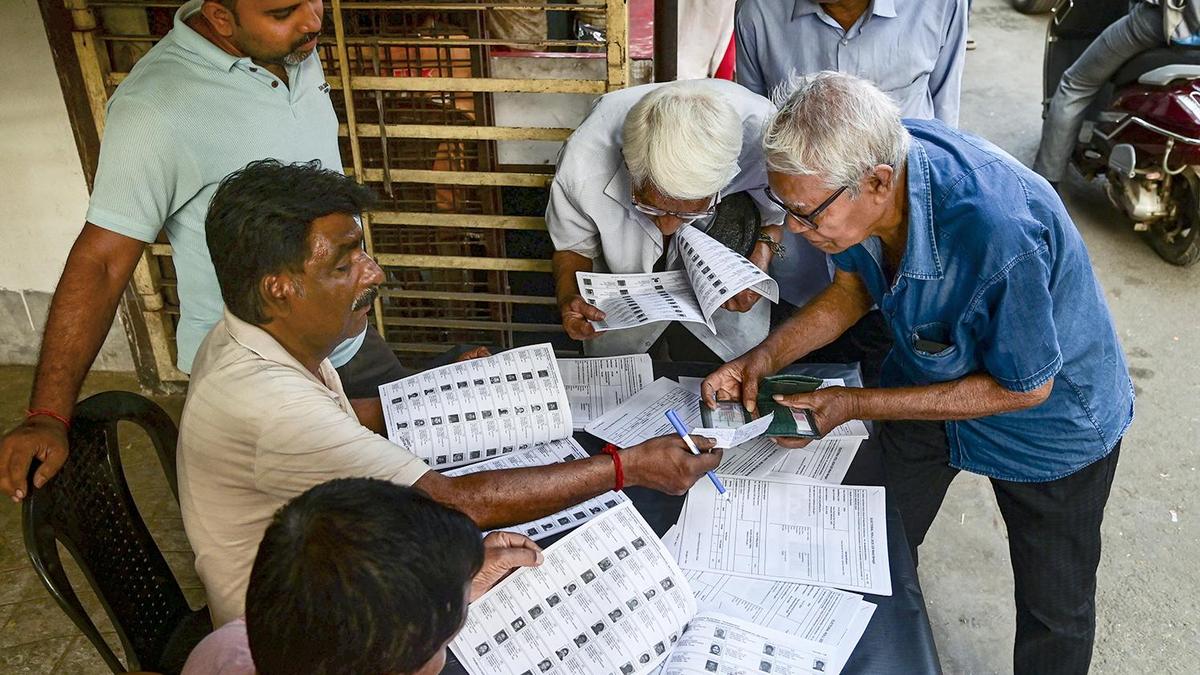

The Election Commission of India (EC) has informed the Supreme Court that over 37 lakh of a total 38 lakh appeals arising out of Special Intensive Revision (SIR) in West Bengal are still pending in 19 Tribunals. The EC said that only 1,02,231 appeals have been disposed of so far.
Over six months have passed since the Supreme Court constituted the Appellate Tribunals. The Municipal elections in the State are drawing near even as voters’ fate remains in limbo.
The EC affidavit covers appeals across 24 districts in West Bengal. It said 38,20,683 appeals were submitted regarding both inclusions and exclusions of voters from the West Bengal electoral roll during the SIR exercise. The number of appeals pending is 37,184,52.

The statistics have come out following a Supreme Court order after petitioners had complained that the details of the tribunals’ pendency and disposal rates continue to be a closely guarded secret instead of being out there in the public domain.
On August 28, senior advocate Gopal Sankaranarayanan and advocate Neha Rathi, appearing for petitioner Prasenjit Bose, chairperson of the SIR Committee, West Bengal Pradesh Congress Committee, had banked on a Right to Information (RTI) response they got from the election authorities to flag the issue of pendency of the 38-odd lakh appeals.

The petitioner side had further pointed out that only seven lakh of these 38 lakh appeals were filed by disenfranchised voters. The remaining 31 lakh appeals, were filed by either the Election Commission or other objectors to exclude more people from the West Bengal electoral roll, Mr. Sankaranarayanan had submitted.
The EC affidavit, dated September 16, contains annexures detailing the separate, District-wise statistics of pendency.
For instance, it said 7,47,921 appeals were filed from Murshidabad district, and only 514 appeals were decided. Likewise, there are 3,03,155 appeals pending from Uttar Dinajpur district, with only 9,104 appeals disposed of.
Editorial |Lists of folly: On the Supreme Court, the SIR and benefits
Again, merely 1,514 appeals were disposed of from among the 5,31,345 appeals filed from Malda district. The affidavit showed sparser figures of case disposal arraigned against other districts like Purba Bardhaman, where out of 2,80,029 appeals only 131 had been decided by the tribunals.
The EC seemed to distance itself from the functioning of these tribunals, saying the appellate mechanism and accessibility fall within the Standard Operating Procedures governing these fora and the authorities entrusted with their administration.

“The feasibility, modalities and implementation of any such measures are matters best left to the consideration of the Appellate Tribunal concerned in accordance with the applicable framework, rather than being made the subject matter for directions against the Respondent (EC),” the affidavit said.
On August 28, the Supreme Court had questioned the EC keeping a lid on publicly releasing data on the pendency and disposal of appeals regarding both exclusions and inclusions arising from the SIR.
The Court had directed the Election Commission (EC) to file an affidavit segregating the exact number of appeals filed by ousted voters seeking re-inclusion into the West Bengal electoral roll, and others wanting more voters to be excluded from the roll.
The Court had sought the precise number of appeals pending in the tribunals and those decided by them. The Court said it would take a call on the need to constitute more tribunals after getting the statistics right.
The Bench had also asked the EC to consider a mechanism for updating, streamlining the progress of pending appeals before the tribunals.
“Give us the data. Give us the breakup of the nature of appeals filed, whether inclusion or exclusion. Then, we will make a call as to whether appeals by disenfranchised voters seeking re-inclusion should be prioritised… Their exclusion from the electoral roll denudes them of their voting rights,” Justice Joymalya Bagchi, part of a Bench headed by Chief Justice Surya Kant, had observed.
Keeping the Municipal polls in mind, Mr. Sankaranarayanan had argued in August that the court must direct the tribunals to give priority to appeals filed by disenfranchised voters.
Published – September 18, 2026 12:40 pm IST