






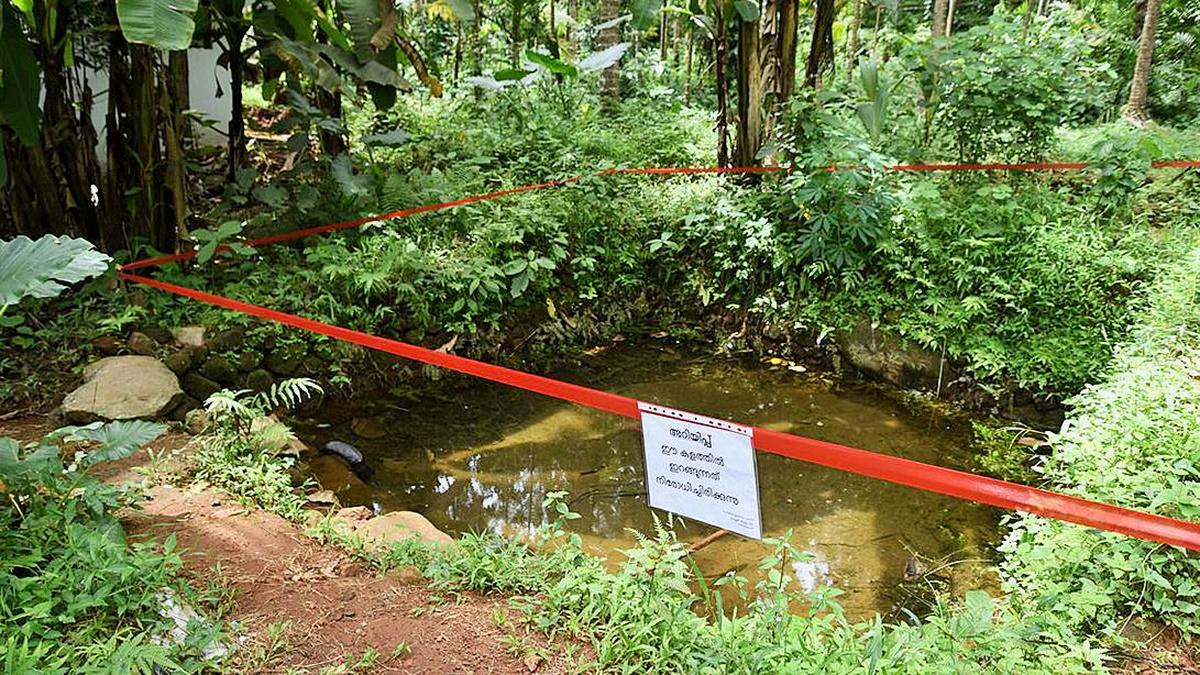


Amoebae could grow quickly in poorly maintained wells, especially when there is heavy rain, flooding, sewage contamination or algal growth, according to health officials.
| Photo Credit: FILE PHOTO
Health officials have warned people with head injuries, facial wounds, or recent head and nose surgeries to stay away from public waterbodies.
The warning comes after a joint study by the Health department and the Indian Council of Medical Research (ICMR) found that they faced high risk of amoebic encephalitis.
The study had found that swimming or diving in ponds and canals raised the risk of infection multiple times for those with maxillofacial injury or nasal surgery.
Exposing skin wounds or ulcers to natural waterbodies is even more dangerous, with many times higher odds of infection.
The Health authorities said Acanthamoeba, an amoeba found in soil and water, can enter through broken skin and reach the brain, causing a slow infection.
Other routes of infection include washing wounds in waterbodies, using non-chlorinated well water, and water forcefully entering the nose while bathing.
Health officials said that the State currently has a 25.8 per cent mortality rate for amoebic encephalitis.
Naegleria fowleri infection turns critical fast and is often fatal, while Acanthamoeba infections respond better to treatment.
Officials said many houses in the State depended on wells, and amoebae could grow quickly in wells that are poorly maintained, especially when there is heavy rain, flooding, sewage contamination, or algal growth.
Risk is higher now with less rain and rising heat. Last month, a youth died of Acanthamoeba infection at Kadampuzha near Kottakkal in Malappuram. A child in the district is under treatment for amoebic infection.
The Health department has asked local bodies to clean public ponds and ensure chlorination of wells.
Published – September 16, 2026 07:01 pm IST