




Maharashtra followed Karnataka with a penalty collection of ₹110.64 crore, while Uttar Pradesh stood third with ₹81.06 crore.
| Photo Credit: K. MURALI KUMAR
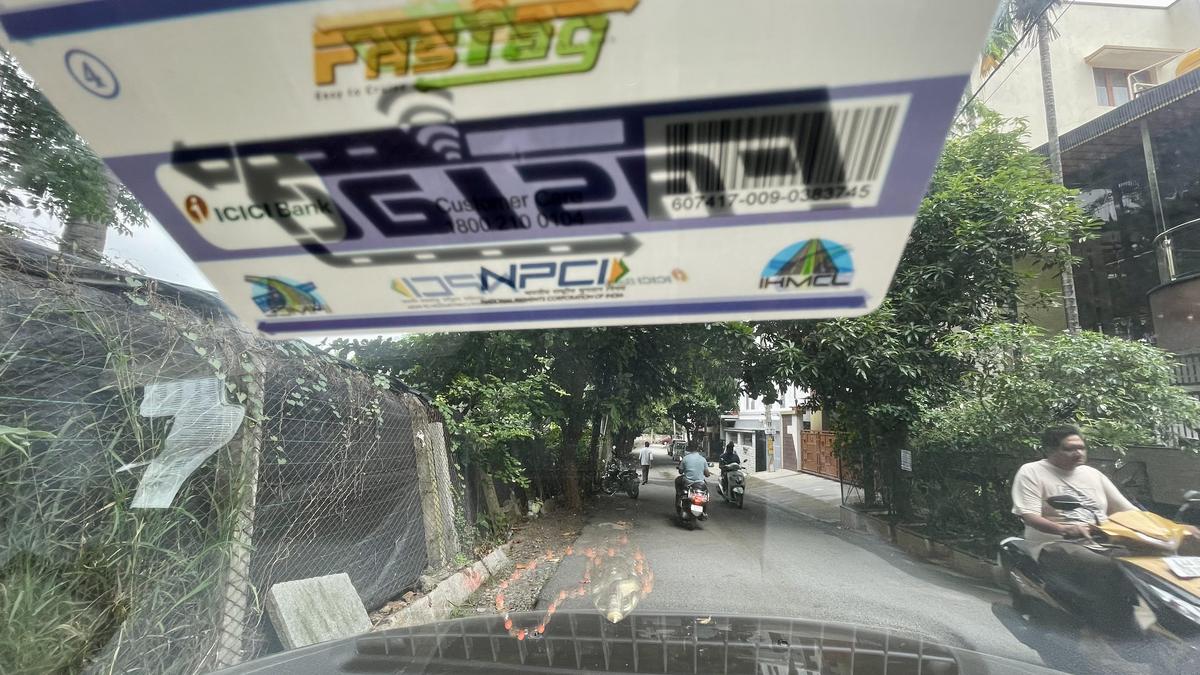
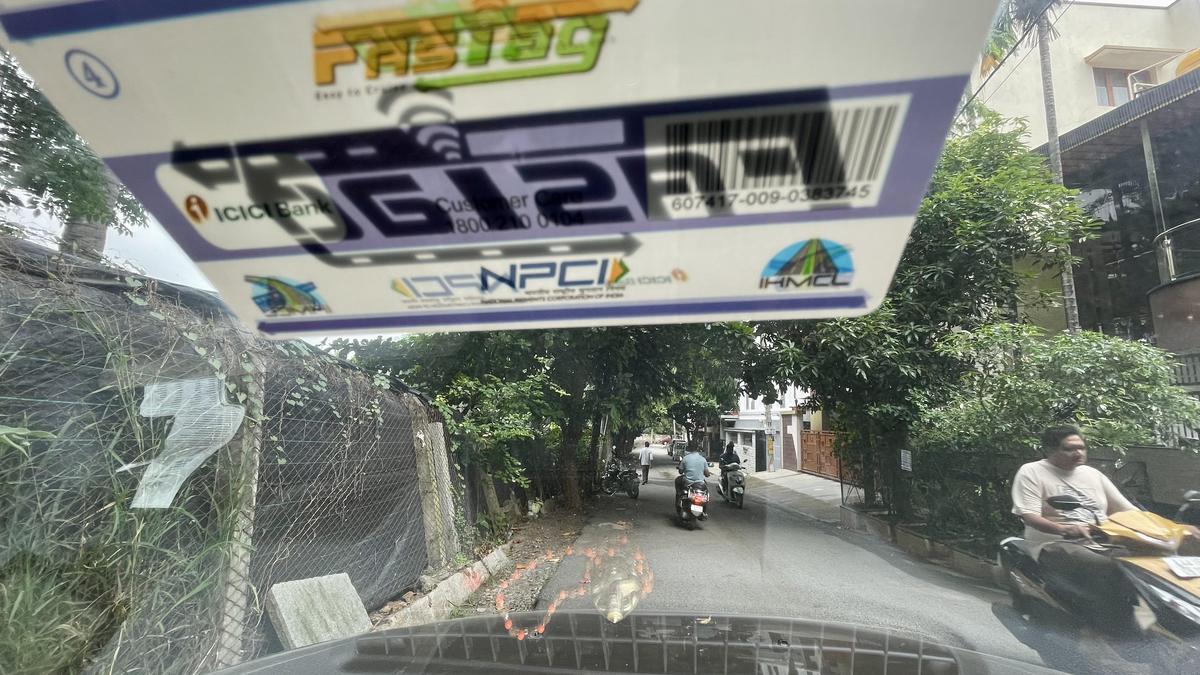
Karnataka has emerged as the highest collector of FASTag-related penalties in the country during the 2024–25 financial year, according to data on double user fees by the Ministry of Road Transport and Highways.
The State collected ₹129.91 crore from motorists who either did not use FASTag or whose tags were invalid or non-functional at toll plazas.
Maharashtra followed Karnataka with a penalty collection of ₹110.64 crore, while Uttar Pradesh stood third with ₹81.06 crore. Other major States that reported high collections include Gujarat (₹78.59 crore), Tamil Nadu (₹71.82 crore), Haryana (₹71.67 crore), and Rajasthan (₹62.35 crore).
Under existing rules, all lanes at toll plazas were declared FASTag lanes with effect from midnight of February 15, 2021. Since then, vehicles not fitted with a valid and functional FASTag are required to pay a fee equivalent to twice the applicable toll for their vehicle category.
Not willful refusal by motorists to adopt FASTag
An official of the National Highways Authority of India (NHAI) said the high penalty figures do not necessarily indicate willful refusal by motorists to adopt FASTag. “In most cases, double user fee collection happens due to practical issues such as insufficient balance, damaged or improperly affixed tags, blacklisted FASTags, or users being unaware that their tags have become inactive,” a senior official told The Hindu.
He said that highway users are repeatedly advised to ensure that their FASTag is valid, properly fixed on the windscreen, and adequately recharged before entering toll plazas.
Top five States in FASTag penalty collections (FY 2024–25)
Karnataka – ₹129,91,72,480
Maharashtra – ₹110,64,69,570
Uttar Pradesh – ₹81,06,66,655
Gujarat – ₹78,58,99,385
Tamil Nadu – ₹71,82,33,400
Source: Ministry of Road Transport and Highways
Partial relaxation
In a move aimed at easing the burden on non-FASTag users while still nudging them towards digital payments, the Centre announced a partial relaxation in October. From November 15, 2025, motorists without FASTag who choose to pay tolls using the Unified Payments Interface (UPI) are eligible for a discounted penalty. The Union government amended the National Highways Fee (Determination of Rates and Collection) Rules, 2008, to allow such users to be charged 1.25 times the applicable user fee instead of double the toll amount levied on cash payments.
Apart from this, the Centre introduced the FASTag Annual Pass on August 15, 2025, aimed at reducing the financial burden on frequent users of national highways. The scheme allows owners of non-commercial vehicles, including cars, jeeps and vans, to purchase an annual pass priced at ₹3,000. The pass is valid for 200 toll crossings or one year, whichever is earlier, and can be used at all toll plazas operated by the National Highways Authority of India (NHAI).
The annual pass can be obtained through the Rajmargyatra app or the NHAI website, and becomes active within two hours of a one-time payment. According to the NHAI officials, the initiative is intended to offer a seamless, cashless and cost-effective option for private motorists, while reducing the need for frequent FASTag recharges.
Published – December 20, 2025 07:47 pm IST