






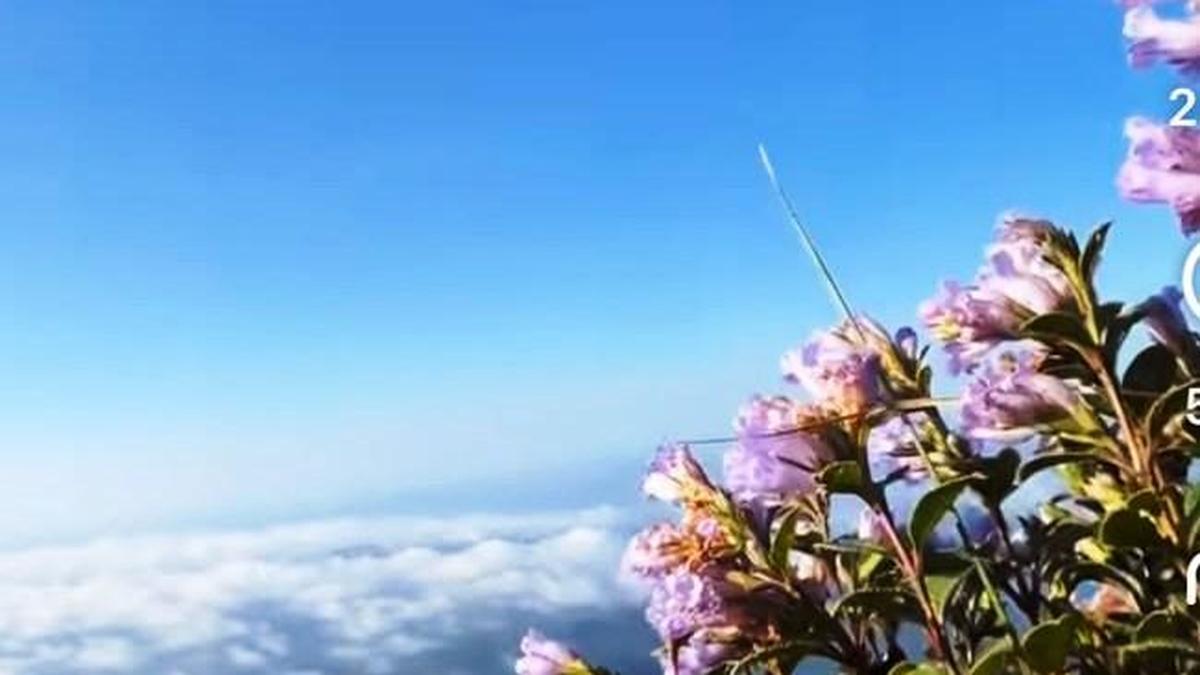


A photo posted on social media by a tourist sitting inside a Neelakurininji plantation in Munnar
| Photo Credit: SPECIAL ARRANGEMENT
The rampant destruction of Neelakurinji blooms in unprotected areas by tourists poses a serious threat to the biodiversity of Munnar. According to Forest department officials, Neelakurinji has bloomed this year across Chinnakkanal, Lakshmi, Pallivasal, and nearby hills. Regulated visitor entry was granted at Chokramudy hills near Devikulam by the Forest department, while the Kanan Devan Hills Plantations (KDHP) permitted access to Korandakkad near Mattupetty, with both authorities safeguarding the plants within these designated zones.
However, officials noted that travel vloggers have been pinpointing unprotected locations and posting footage on social media. Influenced by these videos, large groups of tourists have been trekking through unregulated hills, trampling blooms, and uprooting plants. Munnar Divisional Forest Officer (DFO) Abhay Yadav noted that despite enforcement efforts, the destruction and uprooting of the rare species continue across the hills.
Senthil Kumar. M., CEO of Kestrel Adventures and organiser of the Munnar Marathon, stated that nearly 500 tourists trekked Lakshmi Hills during the early hours of last Sunday to view the blooms. “Some visitors trampled the plants, danced among the flowers, and even slept in the shrubs to capture photos and videos for Instagram. These tourists arrived after watching vlogs,” said Mr. Kumar. “These hills also see active movements of wild elephants and other wildlife. If an animal attack or accident occurs here, it will severely damage Munnar’s tourism sector.”
He warned that unchecked access to unrestricted areas could wipe out the local Neelakurinji population entirely. “Tourism stakeholders are not opposed to visitors viewing the Neelakurinji. Our demand is simply that authorities safeguard the flowering areas so the plants survive for the next cycle,” he added. Forest officials emphasised that the widespread damage calls for immediate regulatory measures to protect these vulnerable habitats and preserve the region’s fragile ecosystem.
Published – September 22, 2026 08:14 pm IST