





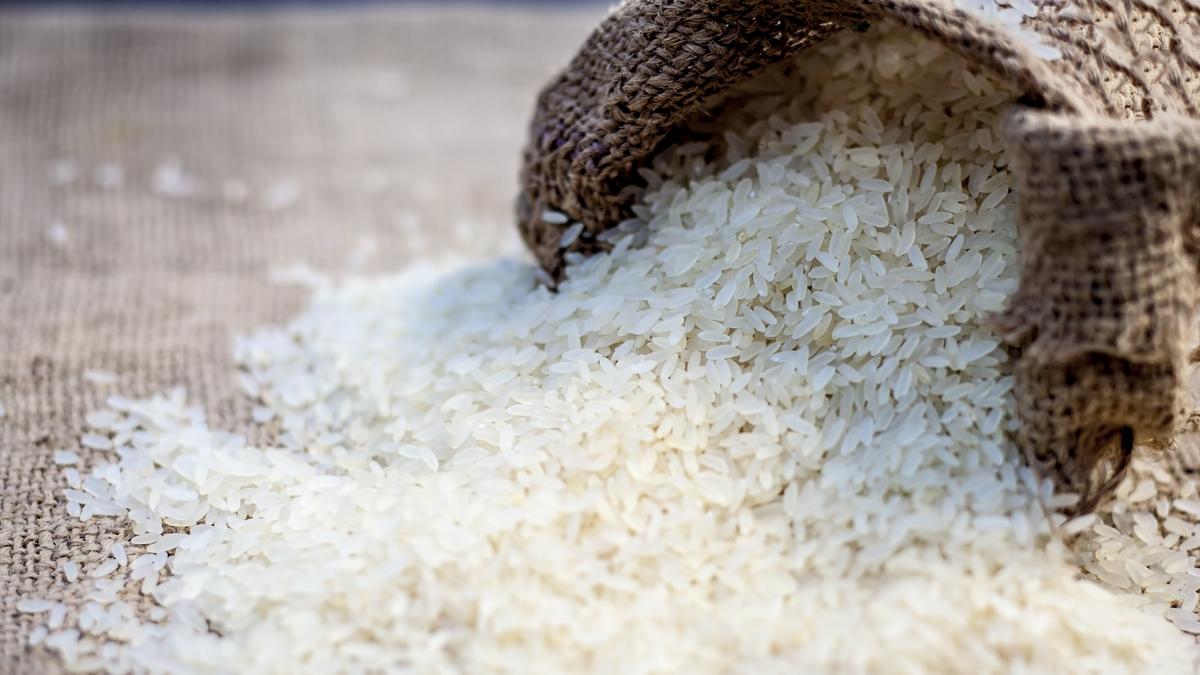


The drop in area under rice cultivation is linked to the forecast of a ‘below normal monsoon’ by the India Meteorological Department in May this year that factored in the likely impact of ‘El Niño’. Representational image
| Photo Credit: Getty Images/iStockphoto
The story so far: The price of rice, the staple of most Indian meals, especially in South India, has gone up suddenly. A 26-kilogram bag of fine rice that used to retail at ₹1,800 per bag, or about ₹70 per kilogram, is now retailing for ₹2,150 per bag, or about ₹82 per kg.
What has changed during this agriculture season in India?
Nationally, the area under rice cultivation for Kharif (monsoon crop) has dropped from 449.18 lakh hectares in 2025-26 to 433.62 lakh hectares. A drop of 3.46% in area sown, according to data from the Ministry of Agriculture and Farmers Welfare. The drop in area under rice cultivation is linked to the forecast of a ‘below normal monsoon’ by the India Meteorological Department in May this year that factored in the likely impact of ‘El Niño’. The periodic climate pattern of warming of the Pacific Ocean that affects trade winds and the Indian monsoon. The central government issued an advisory to States asking farmers to shift to short-duration crops or less-water-intensive crops like pulses and millets. In June, Agriculture Minister Shivraj Singh Chouhan, after a meeting with State government officials, research bodies, IMD and others, said: “Changing crop strategy in rain-fed areas has become the need of the hour”.
Poor rains this monsoon bleed farmers, power utilities
How did the monsoon impact rice crop?
Rice is a water-intensive crop that needs seasonal rain and more water at certain stages of the plant life. The monsoon of 2026 has been patchy, with extended dry spells and less rain. The south-west monsoon ended in India at 12.6% to 13% below the long-period average. According to the IMD: “Out of the 36 meteorological subdivisions, eighteen subdivisions, constituting 53% of the area, received normal rainfall, while 17 subdivisions, representing 42%, recorded deficient rainfall.”
Why is the price rising now?
“The Minimum Support Price is ₹2,440. However, in the open market, the price of a quintal of paddy now is ₹4,000. Just 10 days ago, it was ₹3,400. I have never seen this high price for paddy in my 52-year career,” says a rice miller in Miryalguda, which is a hub for rice mills. Globally, rice prices have gone up by 5.59% over the past month and up by 52.4% compared to the same time last year.
In India, Kharif rice cultivation begins in the first week of June, with the crop ready for harvest in the middle of October and November. Rice millers and traders get regular reports on the status of the crop and accordingly bid for the crop before the harvest. The price is dictated by word-of-mouth buzz in the wholesale market.

Are all rice varieties impacted by the price rise?
No. The demand for fine rice is higher, and its price has gone up substantially. The easy-to-grow and harvest varieties, which include coarse rice, are cultivated in large parts of the country. So far, the price of this rice has remained around ₹40-45 per kg. The arrival of this rice in the market has not been impacted so far. The demand for fine rice is higher in southern India, where the states are supplying it to ration card holders.

What is likely to happen now?
“The price of rice has reached its peak. The arrivals in the wholesale market are yet to begin in a big way. If the arrivals are normal, the price will remain the same. The price is unlikely to go further up or go down substantially due to the weather forecast and warnings by agriculture officers,” says Venkataramana Chowdhury, general secretary of Miryalguda Rice Millers Association.
Published – October 07, 2026 04:53 pm IST